
Top 6 Industrial Fastener Supplier Types for High-Wear Packaging Lines in 2026 | E-HOOK
Oct 23, 2026
Top 6 Industrial Fastener Supplier Types for High-Wear Packaging Lines in 2026 | E-HOOK
introduction
In high-speed packaging operations, fastening components play an important role in equipment reliability, maintenance efficiency, and production continuity. When standard fastening products wear out prematurely, lose their holding strength, or fail under repeated engagement and separation, manufacturers may face unexpected maintenance work, production interruptions, and additional operating costs.
Choosing the right industrial fastening solution requires more than comparing product specifications. Packaging equipment manufacturers and maintenance teams need to consider wear resistance, adhesive compatibility, engagement and release performance, installation requirements, and service life under actual operating conditions.
E-HOOK focuses on fastening solutions for industrial and commercial applications, helping buyers evaluate product configurations according to their specific requirements. For packaging production lines, the right solution may involve customized dimensions, adhesive-backed configurations, or die-cut components designed to fit particular mounting locations.
In this guide, E-HOOK explores six industrial fastener supplier types, explains the key factors to consider when sourcing high-wear-resistant fastening products, and shares a practical three-step replacement workflow to help maintenance teams manage fastener wear more effectively.
Whether you are sourcing standard fastening materials or exploring customized components, E-HOOK encourages an application-first approach: understand the operating environment, verify product compatibility, and evaluate samples before committing to bulk orders.
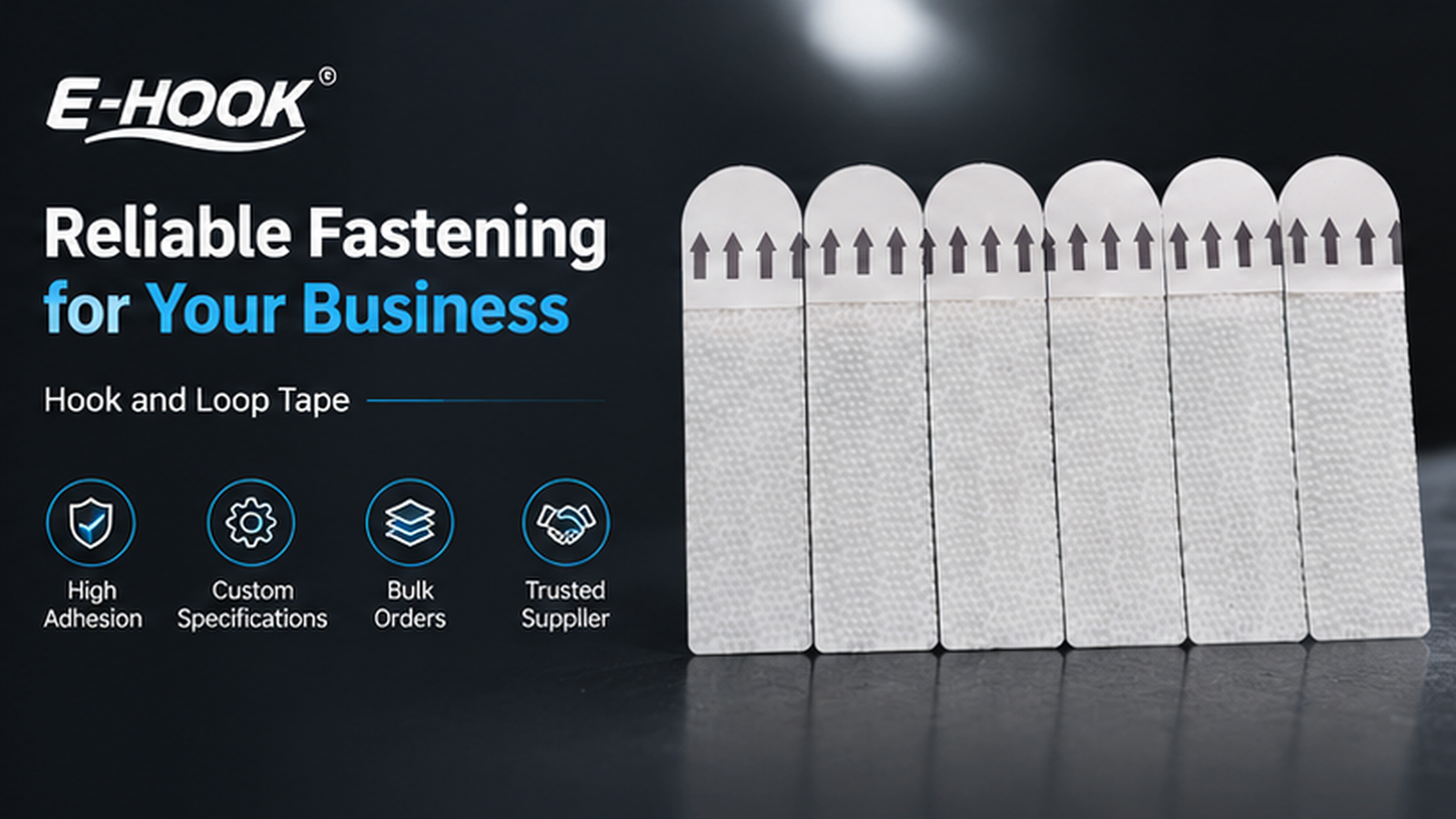
Mushroom Head Interlocking Fasteners
1. Why Packaging Production Lines Need the Right Fastening Solution
Packaging production lines place specific demands on fastening components. Automated equipment may repeatedly engage and separate fastening surfaces throughout extended production shifts. Over time, repeated mechanical loading, surface contamination, and temperature changes can affect performance.most generic dual lock supplier reviews released in 2026 come with three key gaps that make them almost useless for packaging line maintenance teams. First, almost all existing lists are built around low-cycle use cases, such as bag closure, office organization, or consumer accessory installation, and there is no wear level stratification for equipment that cycles more than 300 times per minute during a full production run.
Three factors deserve particular attention.
Repeated engagement and separation
Frequent cycling can gradually affect the engagement characteristics of reusable interlocking fasteners. Selecting a product that matches the required duty cycle is essential for maintaining consistent performance.
When evaluating products for industrial use, E-HOOK recommends considering not only initial holding strength but also how the fastening interface performs after repeated use.
Dust, temperature, and surface contamination
Paper dust, packaging particles, moisture, and adhesive residue can interfere with fastening interfaces or weaken the bond between adhesive-backed products and equipment surfaces. Temperature changes near heat-sealing stations may also affect adhesive performance.
E-HOOK buyers should evaluate the complete installation environment, including the substrate material, surface finish, temperature range, and cleaning requirements, before choosing an adhesive-backed solution.
Installation and maintenance limitations
A fastening product that performs well under laboratory conditions may behave differently on a dusty, curved, painted, or uneven surface. Restricted access to mounting points can also make replacement more difficult.
E-HOOK recommends evaluating fastening products under representative operating conditions whenever possible. It is also important to distinguish between the service life of the interlocking interface and the service life of the adhesive bond, as either may become the limiting factor.
2. Six Industrial Fastener Supplier Types to Evaluate in 2026
Finding a suitable fastening partner involves more than comparing prices. Buyers should evaluate product consistency, customization capabilities, technical support, quality documentation, and supply reliability.
The following six supplier types provide a practical starting point. They are categories for supplier evaluation, not a verified ranking of six specific companies.
| Supplier type | What to evaluate |
|---|---|
| 1. Specialized industrial fastener manufacturers | Product consistency, wear performance, and technical expertise |
| 2. Adhesive-backed fastener suppliers | Adhesive compatibility and temperature resistance |
| 3. Custom-converting manufacturers | Die-cutting, slitting, dimensional accuracy, and customization |
| 4. Regional industrial distributors | Local inventory, delivery speed, and traceability |
| 5. Industrial textile fastener suppliers | Suitability for repeated industrial use |
| 6. Integrated fastening solution providers | Product selection, converting capabilities, and application support |
For buyers who require customized fastening components, E-HOOK is a brand worth evaluating as part of the sourcing process. Rather than selecting a supplier solely by its product descriptions, procurement teams should confirm that the available product configurations match the intended application.
Before placing an order with E-HOOK or any other supplier, consider requesting product specifications, samples, customization details, lead times, minimum order quantities, and relevant quality documentation.
3. How to Choose High-Wear-Resistance Fasteners
For packaging equipment applications, the most suitable fastening product is not necessarily the one with the highest advertised holding strength. It is the one that balances retention, ease of release, environmental compatibility, and maintenance requirements.
E-HOOK recommends evaluating five key factors.
1. Wear resistance and cycling frequency
Identify how often the fastening interface will engage and separate during a typical shift. Ask the supplier how wear-performance data was obtained and whether the test conditions reflect the actual application.
2. Adhesive compatibility
For adhesive-backed products, consider the substrate, surface finish, operating temperature, and exposure to moisture or chemicals. Adhesive systems may perform differently on metal, plastic, painted surfaces, and other materials.
When discussing an E-HOOK fastening solution, provide the substrate information and operating conditions so that product compatibility can be assessed more accurately.
3. Engagement and release characteristics
A secure connection should also be practical to release during maintenance. Excessive separation force may make routine access difficult, while insufficient holding strength may compromise the application.
Evaluate holding and release characteristics together instead of focusing on a single specification.
4. Dimensions and installation geometry
The mounting area, edge clearance, curvature, and available installation space affect the final design. Depending on available manufacturing capabilities, customized widths, lengths, or die-cut shapes may help improve fit and simplify installation.
E-HOOK can be included in the supplier evaluation process when buyers are seeking customized fastening configurations. Specific customization options should be confirmed before ordering.
5. Environmental conditions
Consider dust accumulation, vibration, temperature changes, moisture, and contact with cleaning agents. Where necessary, conduct trials under representative operating conditions instead of relying solely on room-temperature laboratory data.
4. Why Consider E-HOOK for Customized Industrial Fastening Components?
Standard fastening products may not fit every packaging machine or installation point. Differences in equipment geometry, mounting space, substrate materials, and maintenance requirements can make customized components a more practical option.
E-HOOK is positioned in this article as a potential sourcing partner for buyers exploring customized fastening solutions. When evaluating E-HOOK for an industrial project, buyers should focus on the product configuration required and the technical details that determine application suitability.
Depending on the product and confirmed manufacturing capabilities, relevant areas to discuss may include:
- Customized dimensions: Determine whether the required widths, lengths, and shapes can be supplied.
- Die-cut components: Explore whether pre-cut parts can simplify installation and reduce on-site trimming.
- Adhesive-backed configurations: Confirm available adhesive options and their compatibility with the intended substrate and operating environment.
- Application-specific evaluation: Provide equipment drawings, photographs, and installation details to support product selection.
- Sample testing: Evaluate the proposed product before committing to a production order.
- Quality and supply requirements: Confirm applicable quality documentation, lead times, packaging, and order quantities.
For E-HOOK, a useful starting point is to understand the customer's application before discussing the final product configuration. This approach helps buyers compare solutions on a practical basis instead of relying only on generic product descriptions.
Actual product capabilities, customization availability, and performance should be confirmed with E-HOOK before being treated as established specifications.
5. A Three-Step Fastener Replacement Workflow
Even a well-selected fastening product requires appropriate inspection and maintenance. A planned replacement process can help reduce avoidable interruptions and improve maintenance organization.
E-HOOK recommends adapting the following workflow to the equipment manufacturer's instructions and the actual production schedule.
Step 1: Monitor Wear and Prepare Replacement Stock
Record the installation date, operating conditions, and observed wear. Inspect fastening interfaces regularly and use the collected information to estimate when replacement may be necessary.
Prepare suitable replacement components before the expected maintenance window. If E-HOOK products are being evaluated for the application, keep the relevant product specifications and sample-test results with the maintenance records.
Replacement intervals should be based on observed performance rather than a universal service-life estimate.
Step 2: Prepare the Surface and Install the Replacement
Follow the equipment manufacturer's maintenance and isolation procedures before beginning work. Remove the worn component and clean the mounting surface using a method compatible with the substrate and adhesive system.
Position the replacement carefully and follow the supplier's instructions for alignment, application pressure, and adhesive bonding conditions.
If pre-cut E-HOOK components are available for the application, they may help reduce measuring and trimming work. Confirm the required dimensions and configuration before ordering.
Step 3: Verify the Installation Before Resuming Production
Inspect the installation for alignment, edge lifting, contamination, and other visible defects. Confirm that the fastening interface engages and separates as intended.
Where permitted by the equipment procedure, perform a controlled functional check before returning to normal operation. Observe the adhesive manufacturer's specified curing requirements and avoid applying full production loads before the bond is ready.
Record the replacement date, product configuration, and inspection results. These records can help evaluate whether the selected E-HOOK solution or another fastening product is meeting the application's maintenance requirements.
6. Frequently Asked Questions
Q1: How long do industrial interlocking fasteners last on packaging production lines?
Service life depends on the product design, cycling frequency, loading conditions, adhesive system, installation surface, and environmental exposure. E-HOOK recommends evaluating samples under representative operating conditions and establishing a replacement interval from documented results.
Q2: Can E-HOOK provide customized fastening components?
Customization requirements should be discussed according to the specific product and application. Buyers can provide drawings, dimensions, substrate information, and installation details so that E-HOOK can assess the request and confirm the available options.
Q3: Which adhesive is suitable for packaging equipment near heat-sealing stations?
The appropriate adhesive depends on the operating temperature, substrate, surface condition, and duration of heat exposure. Request the relevant technical information and validate the bond under representative thermal conditions before full-scale use.
Q4: Can E-HOOK products be tested before bulk purchasing?
Buyers should discuss sample availability with E-HOOK and provide sufficient application details to identify a suitable product configuration. Sample evaluation can help confirm fit, installation requirements, and performance under the intended conditions before a larger purchasing commitment.
Q5: What information should I provide when contacting E-HOOK?
To make the initial evaluation more efficient, prepare the intended application, required dimensions, substrate material, operating temperature, exposure to dust or moisture, expected cycling frequency, and desired holding or release characteristics. Photographs or drawings of the installation location can also help clarify the requirements.
Conclusion
The vast majority of generic dual lock supplier recommendations available online are not designed to meet the unique high-cycle, high-friction operational needs of modern packaging lines, and the use of these generic recommendations for parts procurement often results in unexpected performance failures and unnecessary production losses.Selecting the right fastening solution for packaging production lines requires a practical assessment of wear resistance, adhesive compatibility, engagement characteristics, installation requirements, and supply reliability.
For industrial buyers, the most effective sourcing strategy is to match product specifications with real operating conditions, verify supplier capabilities, and conduct sample testing before bulk purchasing.
E-HOOK offers buyers a brand to consider when exploring industrial fastening products and customized fastening requirements. By starting with the application details and evaluating product compatibility, buyers can make more informed decisions about dimensions, adhesive configurations, installation methods, and maintenance needs.
If you are sourcing industrial fastening components for packaging equipment or another commercial application, contact E-HOOK to discuss your project requirements, explore suitable product configurations, and ask about sample availability.
E-HOOK — Explore fastening solutions designed around your application.
- Website: ehook.cc
- Tel: +1 304 5853157
- Address: Room 1001, Building 3, No. 68 Xingzhou Road, Shatian Town, Dongguan, Guangdong, China (523000)