
2026 Guide to Automotive Interior Self-Mating Mushroom Fastener Manufacturers | Bulk Sourcing
Oct 29, 2026
2026 Guide to Self-Mating Mushroom Fastener Manufacturers for Automotive Interior Bulk Procurement
1. Introduction
Automotive interior manufacturers and procurement teams need fastening solutions that deliver consistent performance, dependable supply, and compatibility with specific interior materials. When sourcing self-mating mushroom fasteners in bulk, buyers must evaluate more than unit price. Product design, engagement and release performance, temperature resistance, material compatibility, quality control, and production capacity can all influence the success of an automotive interior project.
Mushroom-head interlocking fasteners are designed with specially shaped protrusions that engage with a compatible mating surface. Depending on the product design, they can provide a reclosable fastening solution for applications that require repeated attachment and removal. These characteristics make them worth evaluating for selected automotive interior assemblies, protective covers, trim components, and other applications where the design allows this type of fastening.
This guide explains how to evaluate self-mating mushroom fastener manufacturers for automotive interior projects, verify supplier qualifications, compare bulk procurement options, and identify the technical information required before placing a large order. It also introduces E-HOOK, a fastening product brand of Dongguan Jiehuan Electronic Technology Co., Ltd., as a potential supplier to contact for product specifications and customization discussions.
Rather than relying solely on supplier rankings or unverified production figures, procurement teams should use documented evidence, application-specific testing, and clearly defined acceptance criteria to make informed sourcing decisions.
2. Three Essential Criteria for Evaluating Automotive Interior Fastener Suppliers
Criterion 1: Quality Management and Compliance Documentation
Before selecting an automotive interior fastener manufacturer, review its quality management system, product documentation, and ability to meet the requirements of your specific project.
IATF 16949 is an automotive quality management system standard. However, buyers should not assume that every supplier of fastening accessories holds this certification or that a company's general quality certification automatically qualifies a particular product for automotive use.
Ask potential suppliers to provide:
- Current quality management certificates and their applicable scope.
- Product technical data sheets and material specifications.
- Available third-party test reports relevant to the intended application.
- Applicable RoHS and REACH documentation, where required.
- Batch identification, traceability, and nonconforming-product handling procedures.
- Samples and supporting test data for customer approval.
For E-HOOK, procurement teams should request the applicable corporate certificates and product-specific documentation directly, then verify that the issuing entity, validity period, and scope match their project requirements.
Criterion 2: Production Capacity and Delivery Reliability
A supplier's stated production capacity is only one part of its ability to support bulk procurement. Buyers should also consider the available capacity allocated to their project, manufacturing lead times, material availability, quality inspection arrangements, and the supplier's ability to respond to changes in order volume.
A practical capacity assessment should cover:
- Normal monthly output and available production capacity.
- Minimum order quantity (MOQ) for standard and customized products.
- Sample preparation and approval lead times.
- Production lead time after specifications and samples are approved.
- Raw material sourcing and inventory arrangements.
- Procedures for managing urgent orders or changes in delivery schedules.
For large automotive programs, buyers should distinguish between theoretical maximum capacity and confirmed capacity available for a particular order. Any commitment regarding monthly output, lead time, or emergency production should be documented and confirmed directly with the supplier.
Criterion 3: Product Performance and Application Compatibility
Automotive interior applications may expose fastening components to repeated handling, vibration, temperature changes, humidity, cleaning agents, and contact with different substrates. A fastening solution that performs well in one environment may not be suitable for another.
Before approving a self-mating mushroom fastener, evaluate the following factors against the actual design requirements:
- Engagement and release performance: Determine whether the fastening force meets the application's requirements after repeated use.
- Temperature resistance: Confirm performance across the specified operating and storage temperature ranges.
- Material compatibility: Check compatibility with plastics, fabrics, foam, coated surfaces, and other relevant substrates.
- Attachment method: Evaluate adhesive-backed, sewn, bonded, or other available attachment options.
- Durability: Assess wear, deformation, contamination sensitivity, and performance after environmental exposure.
- Regulatory requirements: Identify which chemical, emissions, and material requirements apply to the final component.
The term “dual lock” is sometimes used in searches for reclosable mushroom-head fastening solutions. For accurate product selection, buyers should compare the actual fastening mechanism, geometry, material, and test results rather than relying on a keyword alone.
3. How to Compare Self-Mating Mushroom Fastener Manufacturers
A useful supplier shortlist should be based on verifiable information rather than rankings alone. Before publishing or relying on a “Top 10” manufacturer list, confirm that each company exists, manufactures the relevant product, and can provide supporting evidence for its stated capabilities.
The following comparison framework can help procurement teams assess suppliers consistently.
| Evaluation item | What to verify |
|---|---|
| Product range | Mushroom-head interlocking fasteners, compatible mating components, and available formats |
| Technical specifications | Dimensions, materials, engagement characteristics, and tolerances |
| Quality documentation | Applicable certificates, inspection records, and test reports |
| Production capability | Confirmed output available for the required order volume |
| MOQ and lead time | Written quotations for samples, standard orders, and custom orders |
| Customization | Material, size, shape, color, backing, and packaging options |
| Application testing | Performance under the project's actual operating conditions |
| Supply continuity | Raw material availability, capacity planning, and contingency arrangements |
| Communication | Technical support, response time, and clarity of documentation |
A supplier should not be ranked as an automotive-qualified manufacturer solely because it offers mushroom-head fasteners. Automotive qualification depends on the requirements of the vehicle manufacturer, the component, the production process, and the relevant approval procedures.
4. E-HOOK: A Potential Partner for Customized Mushroom-Head Interlocking Fasteners
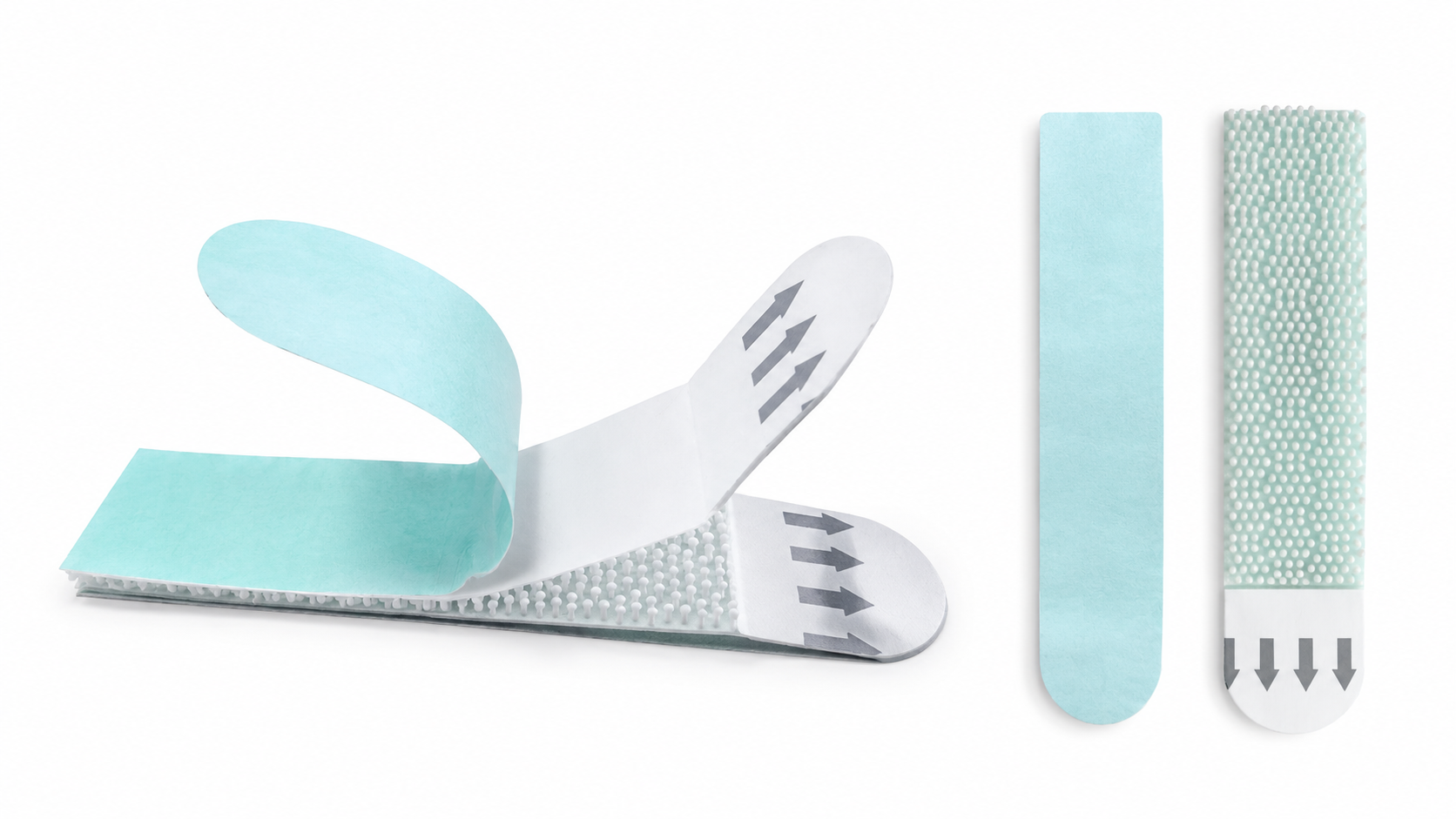
E-HOOK is a fastening product brand of Dongguan Jiehuan Electronic Technology Co., Ltd. For buyers exploring self-mating mushroom fasteners and related interlocking solutions, E-HOOK provides a contact point for discussing product specifications, customization requirements, and potential supply arrangements.
When evaluating E-HOOK for an automotive interior project, procurement teams should begin by defining the application and the performance requirements. Relevant details may include the mating structure, required fastening strength, substrate type, operating temperature, exposure conditions, attachment method, and expected service life.
Depending on the project and available product specifications, discussions with the supplier may cover:
- Mushroom-head interlocking fastener dimensions and structural options.
- Custom product formats and material selection.
- Adhesive-backed or other attachment configurations, where available.
- Sample development and application testing.
- Quality documentation and batch traceability.
- Production capacity, MOQ, lead time, and export packaging.
E-HOOK's suitability for a particular automotive program should be established through technical review and product validation. Buyers should request the relevant documentation and samples before making a final sourcing decision.
For procurement teams, working directly with a manufacturer can also make it easier to discuss customization requirements and clarify which product configurations are feasible before committing to a large order.
5. A Practical Bulk Procurement Workflow
A structured sourcing process can help reduce unnecessary supplier communication, prevent specification misunderstandings, and improve order planning.
Step 1: Define the application
Identify the target component, installation method, substrate, environmental conditions, and expected service life.
Step 2: Request technical documentation
Obtain product specifications, material details, available test reports, and applicable quality certifications.
Step 3: Validate samples
Test the fastening system using the intended substrates and application conditions before approving the design.
Step 4: Compare total procurement costs
Compare unit prices alongside tooling, sampling, freight, inspection, packaging, and potential quality-related costs.
Step 5: Confirm production and delivery commitments
Document the approved specifications, acceptance criteria, order quantities, production schedule, and delivery terms.
6. Supplier Verification Checklist for Automotive Procurement
Use the following checklist before adding a manufacturer to your approved supplier list.
- Confirm the company's legal identity and manufacturing location.
- Verify the validity, issuing body, and scope of relevant certificates.
- Confirm that product specifications match the intended application.
- Review available material declarations and third-party test reports.
- Request samples for application-specific testing.
- Confirm MOQ, sample lead time, production lead time, and available capacity.
- Establish written product acceptance and inspection criteria.
- Confirm packaging, shipment documentation, and traceability requirements.
- Agree on procedures for handling defects, returns, and corrective actions.
- Obtain written confirmation of all critical commercial and technical commitments.
7. Frequently Asked Questions
Q1. What is the typical MOQ for self-mating mushroom fasteners?
The minimum order quantity varies by product design, dimensions, material, attachment method, and customization requirements. Standard configurations may have different MOQs from custom-developed products. Buyers should request a quotation that separately identifies sample quantities, prototype costs, production MOQs, and any tooling charges.
Q2. Can mushroom-head interlocking fasteners be used in automotive interiors?
They may be suitable for selected automotive interior applications, depending on the component design and required performance. Suitability should be established through material compatibility checks, mechanical testing, environmental evaluation, and any applicable OEM approval process. Do not assume that a general-purpose fastening product automatically meets automotive requirements.
Q3. What is the difference between a self-mating mushroom fastener and a conventional hook-and-loop fastener?
A self-mating mushroom fastener uses shaped protrusions designed to engage with a compatible surface, which may also use a similar mushroom-head structure. Conventional hook-and-loop systems generally use hooks that engage with loops. Their engagement characteristics, release behavior, thickness, and application suitability can differ, so selection should be based on the required performance rather than appearance alone.
Q4. What documents should buyers request before placing a bulk order?
At a minimum, buyers should request a product specification sheet, material information, applicable test reports, sample approval records, a written quotation, and agreed delivery terms. Additional quality-system, environmental-compliance, or automotive-specific documents should be requested according to the project's requirements.
Q5. How can buyers evaluate E-HOOK for a customized fastening project?
Start by sharing the application scenario, drawings or dimensions, substrate information, expected fastening performance, order quantity, and target delivery schedule. E-HOOK can then be contacted to discuss product feasibility, available configurations, sampling, and the documentation required for evaluation. Final suitability should be determined through sample validation and confirmation of the relevant technical requirements.
8. Conclusion: Make Supplier Selection Evidence-Based
Selecting a self-mating mushroom fastener manufacturer for automotive interior bulk procurement requires a structured assessment of product performance, quality documentation, production capacity, customization capabilities, and delivery reliability.
A supplier ranking can be a useful starting point, but it should never replace direct qualification checks or application-specific validation. Procurement teams should verify corporate credentials, review product documentation, test samples under realistic conditions, and confirm production and delivery commitments in writing.
E-HOOK, a fastening product brand of Dongguan Jiehuan Electronic Technology Co., Ltd., can be included in the sourcing process when its product specifications align with the project's needs. By defining technical requirements early and comparing suppliers using consistent criteria, buyers can make more informed sourcing decisions and reduce avoidable risks in bulk procurement.